

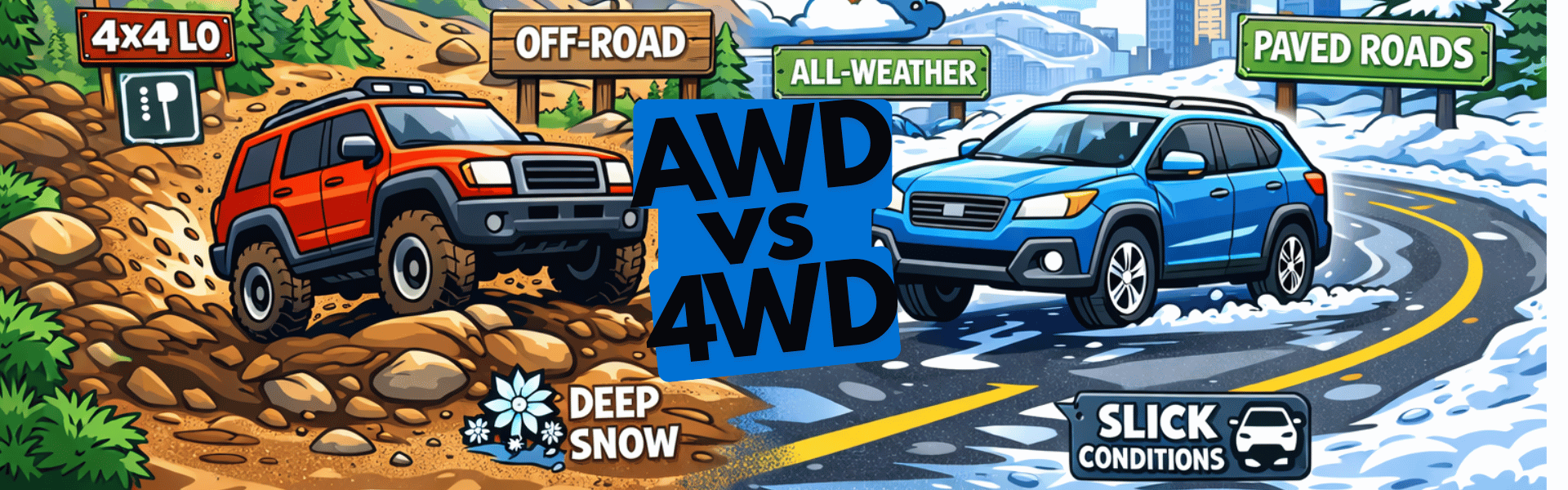
What AWD (All-Wheel Drive) does
AWD automatically sends power to the wheels with the most traction. In many vehicles, it’s “always working in the background” so you don’t have to think about it.Best for: daily driving, wet roads, slush, light-to-moderate snow, and highway travel.What 4WD (Four-Wheel Drive / 4×4) does4WD is most common in trucks and rugged SUVs. Many systems let you switch between 2WD and 4WD and may include 4HI and 4LO (low range). 4LO is a big deal when you need extra torque at low speeds.Best for: deeper snow, unplowed roads, mud, steep terrain, towing/hauling, and off-road use.Local note: Some modern SUVs blur the lines with “Auto 4WD” or advanced traction modes. When buying used, it’s important to check what the vehicle actually has (4HI/4LO, locking diff, snow mode, etc.).
What Do You Actually Need for South Glens Falls + Upstate NY Driving?Here’s the most realistic way to decide.
Choose AWD if you…
- Drive mostly on paved roads (commuting, errands, school runs)
- Want automatic traction help in snow, slush, and rain
- Spend a lot of time on highways and main routes that get plowed first
- Prefer better fuel economy (often) than traditional 4WD trucks/SUVs
- Want a great “set-it-and-forget-it” option for winter confidence
AWD is perfect for: most crossover SUVs and family vehicles that need year-round grip without extra complexity.
Choose 4WD if you…
- Regularly drive on unplowed back roads or have a long/private driveway
- Need capability for deeper snow, mud, or rough terrain
- Work in conditions where you can’t “wait for the plow”
- Tow, haul, or want the added control of 4HI/4LO
- Spend time on trails, campsites, or steep/uneven surfaces
4WD is a smart pick for: truck owners, rural drivers, and anyone who truly needs maximum traction and control.
AWD vs 4WD in Snow: What Matters Most (And What Doesn’t)Both AWD and 4WD can help you get moving when roads are slick. But here’s the truth most people don’t hear: AWD/4WD helps you go — tires help you stop. Stopping distance is where winter driving gets dangerous, and the drivetrain doesn’t change that nearly as much as tire traction. If you want the biggest winter upgrade: consider winter tires (or at least excellent all-season tires) and make sure your brakes and alignment are in good shape.
Pros and Cons for Upstate NY DriversAWD Pros
- Easy: traction help happens automatically
- Great on snowy highways, slush, rain
- Often better fuel economy than many 4WD trucks/SUVs
- Excellent resale value in snow-belt regions
AWD Cons
- Not built for true off-roading (varies by model)
- Some AWD systems aren’t meant to be pushed hard in deep mud/sand for long stretches
4WD Pros
- Strong traction in deep snow and tough conditions
- 4LO can help when you’re stuck, climbing, or pulling through heavy snow
- Great for work, recreation, and rough terrain
4WD Cons
- Usually lower fuel economy
- More weight and often higher purchase/maintenance costs
- Part-time 4WD systems shouldn’t always be used on dry pavement (can cause driveline binding)
Quick Decision Guide (Carriage Traders Version)Pick AWD if you want:
- A confident winter daily driver
- Easier ownership for mixed conditions
- Mostly paved-road driving with occasional storms
Pick 4WD if you need:
- Capability for unplowed roads/driveways
- Work-site or rural reliability
- 4HI/4LO for the toughest conditions
The Most Common Mistake Buyers MakeAssuming AWD or 4WD makes the vehicle “winter-proof.”The best winter setup is:
- good tires
- good brakes
- good visibility (wipers/lights)
- and a drivetrain that matches your needs
Final Takeaway: Which One Do You Actually Need?For many drivers in South Glens Falls and the greater Adirondack-region commutes, AWD is the best all-around choice—simple, confident, and great in the snow you’ll encounter most days.If your routine includes unplowed roads, deep snow, steep driveways, towing, or rugged weekend travel, 4WD (especially with 4LO) is worth it.
Connect with us

